Slider Image

"Oriental Smart Eye Cup" Remote Sensing Image Intelligent Processing Algorithm Contest

International Track 1: Forest Single-Tree Canopy Segmentation

The competition is about to begin!

Sign Up
Slider Image

"Oriental Smart Eye Cup" Remote Sensing Image Intelligent Processing Algorithm Contest

International Track 2: Semantic Segmentation of Underwater Coral Remote Sensing Images

The competition is about to begin!

Sign Up
Slider Image

"Oriental Smart Eye Cup" Remote Sensing Image Intelligent Processing Algorithm Contest

Offline Finals Track 1: Optical-SAR Fusion Cloud Removal

The track has entered the final stage.

Slider Image

"Oriental Smart Eye Cup" Remote Sensing Image Intelligent Processing Algorithm Contest

Offline Finals Track 2: Weak Object Detection and Tracking

The track has entered the final stage.

Background


"Oriental Smart Eye Cup" Remote Sensing Image Intelligent Processing Algorithm Competition was supported by the Department of Information Sciences of the National Natural Science Foundation of China and the International Society for Photogrammetry and Remote Sensing. It was sponsored by the Steering Expert Group of the Major Research Plan on "Fundamental Theories and Key Technologies of Space Information Networks" and titled by LuHai Space Information Technology Co., Ltd. The competition received sponsorship from Oriental Spaceport Research Institute and Oriental Spaceport (Shandong) Development Group Co., Ltd., and was organized by the State Key Laboratory of Information Engineering in Surveying, Mapping and Remote Sensing (LIESMARS) at Wuhan University, Oriental Spaceport Research Institute, Oriental Spaceport (Shandong) Development Group Co., Ltd., and the Collaborative Innovation Center of Geospatial Technology.The competition aims to "promote innovation through competition," driving the innovative development of artificial intelligence technology in the field of remote sensing image processing and application, and providing support for significantly enhancing the capabilities of space information processing and application.

Stage


Preliminary


End of 2025

Semi-final


To be announced

Final


To be announced


Track


International Track 1: Forest Single-Tree Canopy Segmentation

As a vital biological component of forests, the canopy plays a pivotal role in shaping forest ecosystems and regulating ecosystem functions. Accurate extraction of individual tree crown structural characteristics and spatial distribution information forms the foundation for achieving refined monitoring, analysis, and management of forest canopies, providing automated solutions for interpreting large-scale canopy structural information. Currently, tree segmentation techniques based on high-resolution optical imagery remain in their developmental stage, with method accuracy and robustness yet to meet the demands of large-scale application. Therefore, the competition establishes a dedicated track for forest tree canopy segmentation, aiming to advance research on tree canopy segmentation algorithms. This initiative seeks to optimize the precise extraction of structural characteristics and spatial distribution information of individual tree canopies, thereby supporting the realization of refined monitoring, analysis, and management of forest canopy systems.

International Track 2: Semantic Segmentation of Underwater Coral Remote Sensing Images

Coral reefs provide “shelter” for 25% of marine life, play a crucial role in regulating the carbon cycle and protecting coastlines, and generate an annual economic benefit of nearly $10 trillion. However, due to natural variations and human disturbances, coral bleaching and mortality occur frequently, posing severe challenges to their ecosystems. Currently, coral semantic segmentation based on underwater remote sensing imagery has become a vital method for monitoring their health and ecological changes. However, the absorption and scattering patterns of light in underwater imaging differ significantly from those in aerial remote sensing, and coral morphology is complex. Therefore, the competition establishes an underwater coral remote sensing image semantic segmentation track, dedicated to selecting robust and generalizable image semantic segmentation algorithms. This aims to optimize intelligent monitoring and conservation pathways for reef-building corals, providing more precise data support for coral reef ecology and marine conservation.


Offline Finals Track 1: Optical-SAR Fusion Cloud Removal

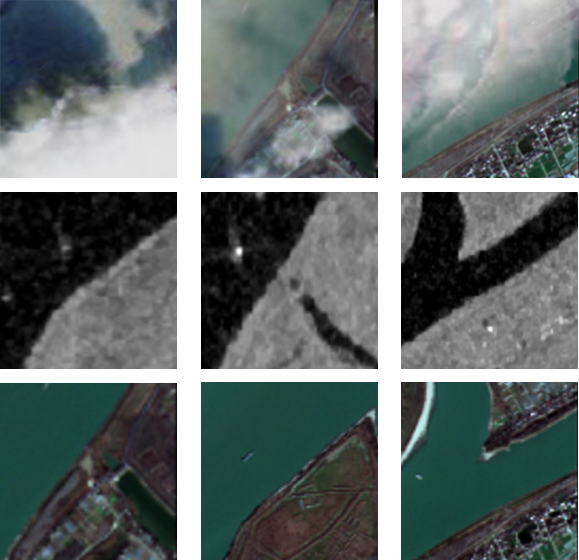
Timely and accurate acquisition of land use information is crucial for dynamically assessing the impacts of human activities on the carbon cycle, biodiversity, and other key ecological processes. Thanks to the increasingly enhanced surface observation capabilities of remote sensing satellites, they have become a key means for accurately obtaining global land use information. However, optical remote sensing suffers from the issue of partial ground information loss due to cloud cover, severely limiting the reliability of continuous monitoring over large areas. In contrast, SAR possesses all-weather, all-time operational capabilities, effectively penetrating clouds to acquire surface information. Consequently, methods integrating SAR imagery for semantic reconstruction in areas where optical remote sensing data is missing have garnered significant attention. This track aims to identify efficient cloud-covered optical-SAR fusion land use classification algorithms to fully leverage the complementary advantages of cross-frequency heterogeneous imagery in long-term, high-frequency land use mapping.

The track has entered the final stage.


Offline Finals Track 2: Weak Object Detection and Tracking

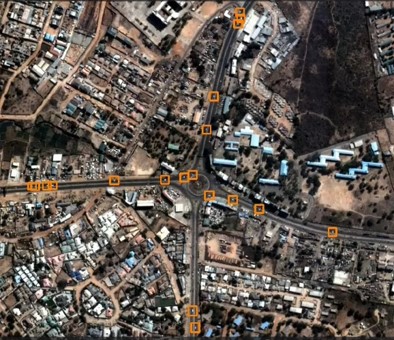
Satellite video demonstrates immense potential in fields such as target monitoring, emergency response, and intelligent sensing. Target detection and tracking based on high-definition remote sensing video are crucial for enhancing traffic monitoring efficiency and optimizing smart city management. However, the small size of ground targets, low signal-to-noise ratio, and complex backgrounds in remote sensing video result in poor robustness of discriminative features, posing significant challenges for detection and tracking tasks. Therefore, the competition establishes a Weak Small Target Detection and Tracking track dedicated to selecting advanced algorithms (high detection/tracking accuracy, low computational complexity) capable of accurately identifying and continuously tracking moving objects (vehicles, aircraft, ships) within high-definition optical satellite video data. This aims to expand practical applications of remote sensing video, enhance traffic monitoring, and improve road network management efficiency.

The track has entered the final stage.


Supporter

  • Information Science Department of National Natural Science Foundation of China

  • International Society of Photogrammetry and Remote Sensing
Host

  • Guiding Expert Group of the Major research program of "Basic Theory and Key Technologies of Spatial Information Network"

Organizer

  • State Key Laboratory of Surveying, Mapping and Remote Sensing Information Engineering, Wuhan University
  • Oriental Spaceport Research Institute
  • Oriental Aerospace Port (Shandong) Development Group Co., Ltd.
  • Collaborative Innovation Center of Geospatial Technology

Exclusive Naming Sponsor

  • StarAI Spatio-temporal Intelligence Technology Co., Ltd.

Sponsor

  • Huawei Technologies Co.Ltd
  • Oriental Aerospace Port (Shandong) Development Group Co., Ltd.
  • Oriental Spaceport Research Institute